2026 Honda MPG Guide: Compare Fuel Economy Across the Honda Lineup
Explore Honda MPG, Hybrid Efficiency, and MPGe Ratings Across Sedans, SUVs, Trucks, and EVs — and Find the Model That Fits How You Drive in the East Bay.
Fuel economy matters more when driving conditions change as often as they do around El Cerrito. A short run through Berkeley traffic feels completely different from a longer stretch toward Walnut Creek or a stop-and-go commute through Oakland. That mix of city driving, short trips, and congestion tends to favor vehicles that stay efficient in real use, not just on paper.
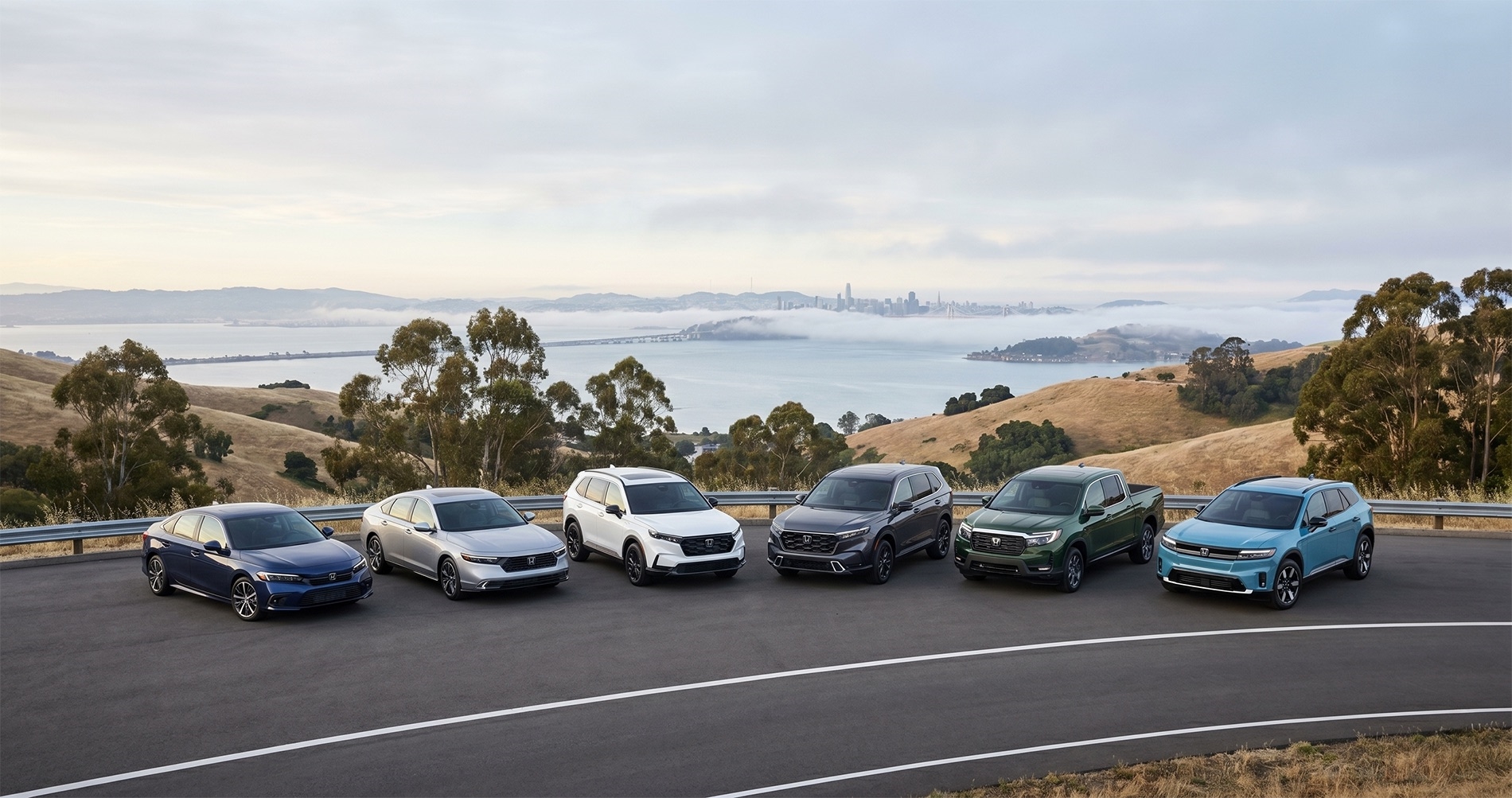
Honda has leaned into that reality. Instead of limiting strong MPG to one or two standout models, the lineup spreads efficiency across sedans, hybrids, SUVs, and fully electric options. The Civic and Accord hybrids lead for pure fuel savings, the CR-V Hybrid gives SUV buyers a more balanced option, and models like the Prologue shift the conversation beyond gasoline entirely. The result is a lineup where efficiency becomes part of the ownership experience, not something you have to chase.
This guide breaks down Honda MPG across the full lineup with that real-world use in mind. The goal is not just to show numbers, but to help clarify which models make the most sense depending on how and where the vehicle will actually be driven.
View Quick Answers About Honda MPG Across the Lineup ▼
Which Honda models get the best MPG?
Hybrid models like the Honda Civic Hybrid and Honda Accord Hybrid sit at the top of the lineup for fuel efficiency, with combined ratings that approach or exceed 45–50 MPG depending on configuration. They are the strongest fit for drivers who spend a lot of time in stop-and-go traffic or daily commuting.
Which Honda SUV has the best fuel economy?
The Honda CR-V Hybrid offers one of the best balances in the lineup. It delivers strong MPG for an SUV while still providing the cargo space, seating position, and everyday flexibility many drivers want.
Do Honda hybrids actually make a difference in daily driving?
Yes. Hybrid systems improve efficiency most noticeably in city conditions where frequent stops and acceleration allow the electric motor to take on more of the workload. That tends to show up quickly in real-world fuel savings.
How does MPG change across the Honda lineup?
Smaller sedans and hybrids typically deliver the highest fuel economy, while larger SUVs and trucks trade some efficiency for space, capability, and passenger flexibility. The key difference comes down to how the vehicle is used day to day.
Is the Honda Prologue rated in MPG?
No. The Prologue is fully electric, so it uses MPGe instead of MPG. It also provides an estimated driving range on a full charge, which becomes the more relevant number for ownership.
Which Honda model makes the most sense for commuting?
For most commuting patterns, especially around areas like Oakland, Berkeley, and Richmond, the Civic Hybrid or Accord Hybrid tend to be the easiest to live with. They combine strong MPG with a comfortable, low-effort driving experience over time.
Why Fuel Economy Matters More When Gas Prices Climb
Fuel economy starts to feel different when gas prices move up. It stops being a background spec and becomes something drivers notice every week. Around El Cerrito, that shows up quickly. A short drive through Berkeley traffic, a few runs across Richmond, and a longer stretch toward Walnut Creek can all happen in the same week. When those miles stack up, even small differences in MPG start to matter in a way that is easy to feel.
The real impact shows up in how often you stop for fuel and how much each fill-up costs. A more efficient vehicle simply stretches each tank further. Over time, that changes the rhythm of ownership. Fewer stops, more predictable costs, and less sensitivity to price swings. For drivers who deal with a mix of city traffic and short, frequent trips, that consistency becomes more valuable than a single high highway number.
Longer drives bring a different kind of benefit. Whether it is heading out past Oakland for the weekend or covering more ground during the workweek, efficient vehicles reduce the effort and cost of those miles without changing how the vehicle feels on the road. The experience stays comfortable and familiar, but the operating cost stays more controlled.
That is why MPG continues to carry weight when comparing vehicles. It is not just about the number itself. It is about how that number fits into daily driving. The right level of efficiency depends on how the vehicle will be used, and understanding that connection helps narrow the decision down quickly.
Why Honda Has Stayed Consistent on Fuel Efficiency
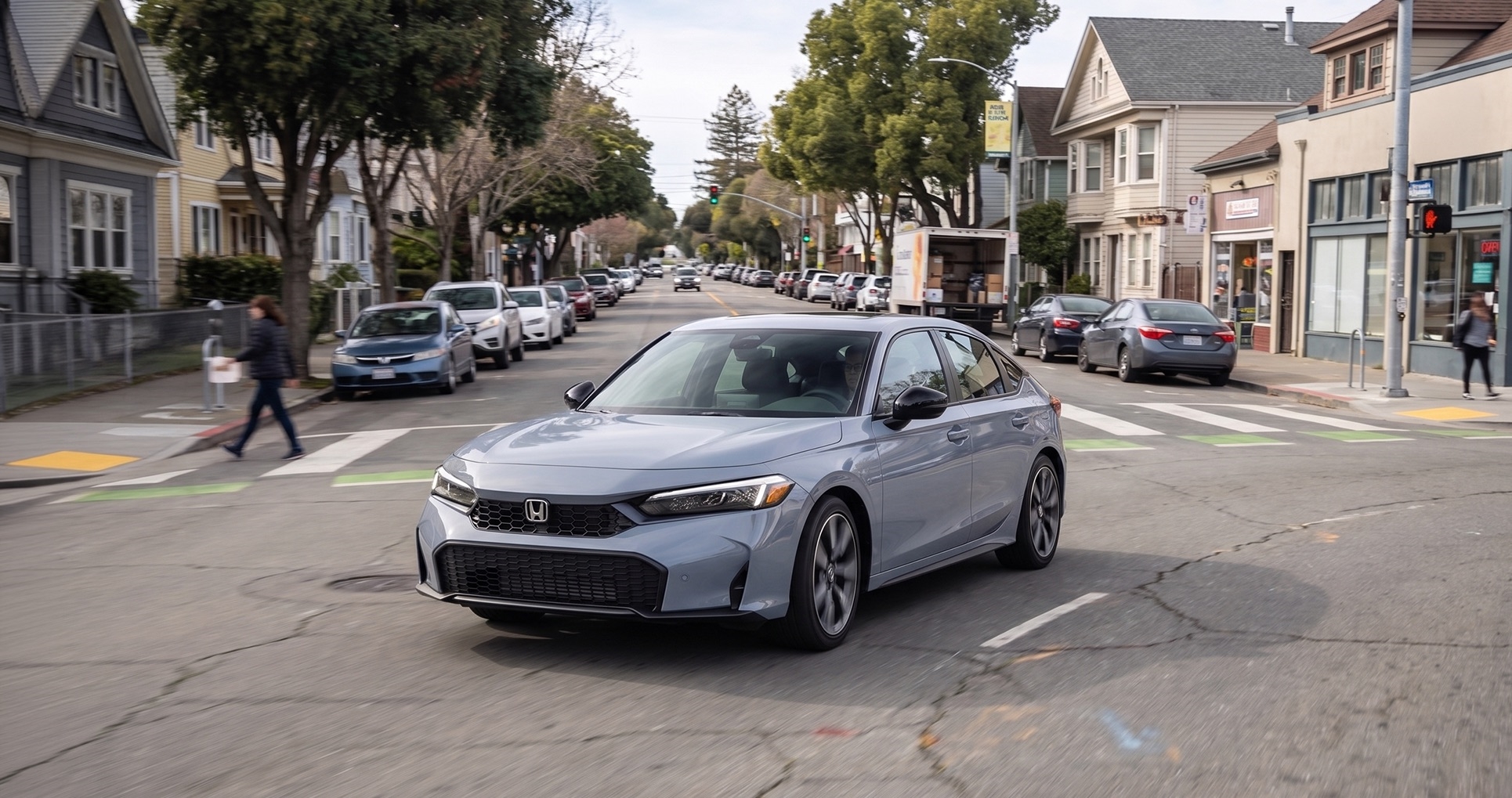
Honda has built its reputation around vehicles that are easy to live with over time. Fuel efficiency plays a central role in that. Instead of isolating efficiency to one part of the lineup, Honda spreads it across sedans, hybrids, and SUVs so drivers can choose the shape and size they need without stepping too far away from reasonable fuel use.
Part of that comes from how Honda approaches engine design. Smaller, more efficient engines paired with continuously variable transmissions keep the vehicle operating in a range that makes sense for real driving. The result is a smoother, more predictable feel in traffic and steady efficiency during longer stretches on the highway.
Hybrid models take that a step further. Honda’s two-motor hybrid system shifts more of the workload to the electric motor in stop-and-go conditions, which is exactly where many East Bay drivers spend their time. That is why vehicles like the Civic Hybrid, Accord Hybrid, and CR-V Hybrid tend to show their strongest advantage in everyday use rather than just on paper.
Beyond the powertrain, Honda focuses on efficiency in smaller ways that still add up. Lighter construction, cleaner airflow, and careful tuning across the drivetrain all contribute to how the vehicle moves through real-world conditions. None of these changes feel dramatic on their own, but together they create a lineup that consistently stays efficient without changing how the vehicle fits into daily life.
Honda Models With The Best MPG
City, highway, and combined fuel economy by model and trim
Honda Models MAX MPG COMPARISON ▼
| Honda Max EPA MPG Comparison |
| Honda Vehicle |
Gas (City / Highway) |
Hybrid (City / Highway) |
Max Combined MPG |
| Accord Sedan |
29 / 37 |
51 / 44 |
48 |
| Civic Sedan |
32 / 41 |
50 / 47 |
49 |
| Civic Hatchback |
30 / 38 |
50 / 45 |
48 |
| CR-V |
28 / 33 |
43 / 36 |
40 |
| HR-V |
26 / 32 |
— |
28 |
| Pilot |
19 / 27 |
— |
22 |
| Passport |
19 / 25 |
— |
21 |
| Ridgeline |
18 / 24 |
— |
21 |
| Odyssey |
19 / 28 |
— |
22 |
| Prelude Hybrid |
— |
46 / 41 |
44 |
| Prologue |
— |
113 / 94 MPGe |
104 MPGe |
The table starts to make more sense once you think about how driving actually works around here. Most trips are short, stop-and-go, and rarely settle into a steady rhythm. That is exactly where the Civic and Accord hybrids pull ahead. They stay efficient when the drive feels fragmented, which is what most weekdays look like.
The CR-V Hybrid lands in a different lane. It keeps that efficiency while still handling the kind of use people rely on, loading up after a grocery run, heading out for a day near the water, or just needing space without thinking twice. It avoids the usual SUV tradeoff.
From there, the numbers reflect purpose. The Pilot, Passport, Odyssey, and Ridgeline prioritize space and capability, so MPG stays reasonable for what they are. The Prologue shifts the conversation entirely toward range and charging instead of fuel.
The takeaway is simple. Honda gives you efficiency at every level, but it shows up differently depending on how you actually drive.
Honda Accord MPG BY TRIM ▼
| Honda Accord MPG By Trim |
| Accord Sedan Trim |
Powertrain |
City MPG |
Highway MPG |
Combined MPG |
| LX |
Gas |
29 |
37 |
32 |
| SE |
Gas |
28 |
36 |
31 |
| Sport Hybrid |
Hybrid |
46 |
41 |
44 |
| EX-L Hybrid |
Hybrid |
51 |
44 |
48 |
| Sport-L Hybrid |
Hybrid |
46 |
41 |
44 |
| Touring Hybrid |
Hybrid |
46 |
41 |
44 |
The Accord lineup splits into two clear paths, and the difference shows up quickly once you think about how it will be used. The gas LX and SE keep things simple and steady. They make sense for drivers who spend more time moving at a consistent pace, where highway efficiency and a straightforward setup matter more than squeezing out every last mile in traffic. If you want a full breakdown of how each version is positioned, you can explore the 2026 Honda Accord trim levels here.
The hybrid trims shift the focus. Around here, where a drive can mean rolling a few blocks, stopping, and starting again all the way through, the Sport Hybrid and EX-L Hybrid start to feel like the natural fit. They take advantage of that stop-and-go rhythm instead of fighting it.
The EX-L Hybrid stands out because it pushes efficiency the furthest without changing how the car feels day to day. The Sport-L and Touring keep similar MPG while layering in more refinement.
The real decision comes down to driving pattern. If most trips are broken up and local, the hybrid trims simply fit better over time.
Honda Civic Sedan MPG BY TRIM ▼
| Honda Civic Sedan MPG |
| Civic Sedan Trim |
Powertrain |
City MPG |
Highway MPG |
Combined MPG |
| LX |
Gas |
32 |
41 |
36 |
| Sport |
Gas |
31 |
39 |
34 |
| Sport Hybrid |
Hybrid |
50 |
47 |
49 |
| Sport Touring Hybrid |
Hybrid |
50 |
47 |
49 |
The Civic sedan lineup follows a similar pattern, but the gap between gas and hybrid matters even more here. The LX and Sport already deliver strong efficiency, which makes them easy to live with for longer, steady drives or a mix of light commuting and weekend use. If you want to see how each trim is structured, you can explore the 2026 Honda Civic trim levels here.
The hybrid trims change how the car fits into everyday driving. Around here, where a quick trip can mean a handful of stoplights, merging traffic, and short stretches that never quite open up, the Sport Hybrid and Sport Touring Hybrid take advantage of that pattern. They stay efficient when the drive feels broken up instead of consistent.
What stands out is how little you give up to get there. The hybrid versions keep the same size, usability, and overall feel, but stretch fuel use much further over time.
For drivers who spend most of their time on shorter, stop-and-go routes, the hybrid trims tend to make more sense the longer you own them.
Honda Civic Hatchback MPG BY TRIM ▼
| Civic Hatchback MPG |
| Civic Hatchback Trim |
Powertrain |
City MPG |
Highway MPG |
Combined MPG |
| Sport |
Gas |
30 |
38 |
34 |
| Sport Hybrid |
Hybrid |
50 |
45 |
48 |
| Sport Touring Hybrid |
Hybrid |
50 |
45 |
48 |
The Civic Hatchback follows the same efficiency pattern, but adds a layer of flexibility that shows up in everyday use. The gas Sport keeps things simple and efficient enough for steady driving, especially if most miles come from longer stretches where traffic opens up.
The hybrid trims shift that focus toward how people actually use the car day to day. A quick run to grab takeout, a stop at the store, or weaving through traffic without ever getting into a steady flow all play to the strengths of the Sport Hybrid and Sport Touring Hybrid. They stay efficient when the drive feels broken up instead of predictable.
The hatchback layout is what changes the experience. It makes loading gear, groceries, or weekend essentials easier without stepping into a larger vehicle. That added usability, combined with hybrid efficiency, tends to make these trims feel more adaptable over time.
For drivers who want Civic-level efficiency but need more flexibility in how they use the space, the hybrid hatchback stands out quickly.
Honda CR-V MPG BY TRIM ▼
| CR-V MPG |
| CR-V Trim |
Drivetrain & System |
City MPG |
Highway MPG |
Combined MPG |
| EX |
2WD CVT |
28 |
33 |
30 |
| EX |
AWD CVT |
27 |
31 |
29 |
| EX-L |
2WD CVT |
28 |
33 |
30 |
| EX-L |
AWD CVT |
27 |
31 |
29 |
| Sport Hybrid |
2WD Two-Motor Hybrid System |
43 |
36 |
40 |
| Sport Hybrid |
AWD Two-Motor Hybrid System |
40 |
34 |
37 |
| TrailSport Hybrid |
AWD Two-Motor Hybrid System |
38 |
33 |
35 |
| Sport-L Hybrid |
2WD Two-Motor Hybrid System |
43 |
36 |
40 |
| Sport-L Hybrid |
AWD Two-Motor Hybrid System |
40 |
34 |
37 |
| Sport Touring Hybrid |
AWD Two-Motor Hybrid System |
40 |
34 |
37 |
The CR-V lineup shows where Honda really finds its balance. The gas EX and EX-L keep things steady and predictable, especially for longer drives where traffic opens up and the vehicle can settle into a rhythm. They make sense if most miles come from consistent movement rather than constant stops. If you want to see how each version is positioned, you can explore the 2026 Honda CR-V trim levels here.
The hybrid trims shift that experience. Around here, where a drive can mean pulling out, stopping two blocks later, and repeating that pattern all the way through, the Sport Hybrid and Sport-L Hybrid start to feel more natural. They use that stop-and-go pattern instead of working against it.
What stands out is how little changes beyond efficiency. The space stays the same. The usability stays the same. You still have room for a full grocery run, a beach day setup, or whatever ends up in the back during the week.
The TrailSport Hybrid trades a bit of MPG for added capability, while AWD versions keep traction in play without a major drop. The decision comes down to how often you deal with varied conditions versus staying on pavement.
Honda HR-V MPG BY TRIM ▼
| HR-V MPG |
| HR-V Trim |
Drivetrain |
City MPG |
Highway MPG |
Combined MPG |
| LX |
2WD CVT |
26 |
32 |
28 |
| LX |
AWD CVT |
25 |
30 |
27 |
| Sport |
2WD CVT |
26 |
32 |
28 |
| Sport |
AWD CVT |
25 |
30 |
27 |
| EX-L |
2WD CVT |
26 |
32 |
28 |
| EX-L |
AWD CVT |
25 |
30 |
27 |
The HR-V keeps things straightforward, and that shows in the MPG. Every trim lands in a tight range, which means the decision is less about chasing numbers and more about how you plan to use it. It fits the kind of driving that happens in shorter bursts, quick errands, parking in tighter spots, and moving through busy streets without needing something larger. If you want a closer look at how each version is set up, you can explore the 2027 Honda HR-V trim levels here.
Front-wheel drive versions hold a slight edge in efficiency, which makes sense for everyday use where conditions stay consistent. If most drives look like quick trips across town or bouncing between stops, that setup keeps things simple and efficient.
All-wheel drive trades a small amount of MPG for added confidence when conditions change. That can matter on early mornings, wet roads, or when heading out toward areas where the terrain shifts a bit. It is a small difference on paper, but it adds a layer of flexibility.
The takeaway is consistency. The HR-V stays efficient without asking you to adjust how you drive, which is what makes it easy to live with over time.
Honda Odyssey MPG BY TRIM ▼
| Odyssey MPG |
| Odyssey Trim |
Transmission |
City MPG |
Highway MPG |
Combined MPG |
| EX-L |
10-Speed Automatic Transmission |
19 |
28 |
22 |
| Sport-L |
10-Speed Automatic Transmission |
19 |
28 |
22 |
| Touring |
10-Speed Automatic Transmission |
19 |
28 |
22 |
| Elite |
10-Speed Automatic Transmission |
19 |
28 |
22 |
The Odyssey keeps things consistent across the lineup, and that is intentional. Every trim lands at the same MPG, which means the decision is not about efficiency. It is about how the space and features fit into daily life.
This is a vehicle built around movement. School drop-offs, practice runs, loading up for a weekend, or fitting everything in without needing a second trip. Around here, that often means navigating tight parking lots, pulling in and out of busy streets, and spending more time in short, stop-and-go drives than long highway stretches.
The fuel economy reflects that role. It stays reasonable for the size and capability, without asking you to compromise what the vehicle is meant to do. The 10-speed automatic helps keep things smooth and predictable whether the drive is short and busy or stretches out a bit further.
The takeaway is simple. You choose the Odyssey for how it works, and the MPG holds steady alongside it.
Honda Pilot MPG BY TRIM ▼
| Pilot MPG |
| Pilot Trim |
Drivetrain |
City MPG |
Highway MPG |
Combined MPG |
| EX-L |
2WD |
19 |
27 |
22 |
| EX-L |
AWD |
19 |
25 |
21 |
| TrailSport |
AWD |
18 |
23 |
20 |
| Touring |
AWD |
19 |
25 |
21 |
| Touring Blackout |
AWD |
19 |
25 |
21 |
| Elite |
AWD |
19 |
25 |
21 |
| Black Edition |
AWD |
19 |
25 |
21 |
The Pilot stays consistent across the lineup, which tells you where the focus is. This is not a vehicle built around maximizing MPG. It is built to move people, gear, and everything that comes with a full schedule without feeling limited. If you want to see how each trim is structured, you can explore the 2026 Honda Pilot trim levels here.
Most trims land in a tight range, whether front-wheel drive or AWD. That makes the decision less about fuel economy and more about how the vehicle will be used. School runs, weekend trips, loading up for a full day out, or fitting everyone in comfortably without thinking twice about space.
The TrailSport shifts slightly lower in MPG, and that reflects its setup. It leans more toward uneven roads, trail access, and situations where capability matters more than squeezing out a few extra miles per gallon.
Around here, where a drive can go from tight streets to open stretches and back again, the Pilot holds steady. It delivers predictable fuel use for a three-row SUV while keeping the flexibility that makes it easy to rely on every day.
Honda Passport MPG BY TRIM ▼
| Passport MPG |
| Passport Trim |
Drivetrain |
City MPG |
Highway MPG |
Combined MPG |
| RTL |
AWD |
19 |
25 |
21 |
| RTL Towing |
AWD |
19 |
25 |
21 |
| RTL Blackout |
AWD |
19 |
25 |
21 |
| TrailSport |
AWD |
18 |
23 |
20 |
| TrailSport Blackout |
AWD |
18 |
23 |
20 |
| TrailSport Elite |
AWD |
18 |
23 |
20 |
| TrailSport Elite Blackout |
AWD |
18 |
23 |
20 |
The Passport keeps its MPG consistent across most of the lineup, which reflects what it is built for. This is a two-row SUV that leans more into strength and flexibility than chasing efficiency numbers. The RTL-based trims hold steady, making them easy to live with for everyday driving while still offering the space and capability people rely on. If you want to see how each trim is set up, you can explore the 2026 Honda Passport trim levels here.
The TrailSport trims step slightly lower, and that tradeoff is intentional. They are set up for rougher roads, trail access, and getting beyond paved routes when plans shift. That added capability shows up in the MPG, but it also expands where the vehicle can go.
Around here, that can mean loading up and heading out without overthinking the route, whether it is a coastal drive, a trailhead, or just getting out of the usual routine. The Passport fits that kind of use without feeling oversized or difficult to manage day to day.
The takeaway is clear. You are choosing the Passport for what it can handle, and the fuel economy stays reasonable alongside that purpose.
Honda Ridgeline MPG BY TRIM ▼
| Ridgeline MPG |
| Ridgeline Trim |
Drivetrain |
City MPG |
Highway MPG |
Combined MPG |
| Sport |
AWD |
18 |
24 |
21 |
| RTL |
AWD |
18 |
24 |
21 |
| TrailSport |
AWD |
18 |
23 |
20 |
| TrailSport + HPD Wheels |
AWD |
18 |
23 |
20 |
| Black Edition |
AWD |
18 |
24 |
21 |
| Black Edition Two-Tone |
AWD |
18 |
24 |
21 |
The Ridgeline stays consistent across the lineup, which reflects how it is meant to be used. Every trim sits in a similar MPG range because the focus stays on capability, not chasing small efficiency gains. This is a truck designed to handle real tasks without feeling overly heavy or difficult to drive day to day.
That shows up in how it fits into everyday life. Loading up gear, hauling materials, or heading out with bikes or boards in the back feels natural without needing to step into a full-size truck. Around here, that often means moving between tight streets, parking lots, and open stretches without constantly adjusting how you drive.
The TrailSport trims trade a small amount of highway efficiency for added durability and traction, especially when the route turns uneven or less predictable. The rest of the lineup keeps things balanced, holding steady whether the truck is used for work, errands, or weekend plans.
The takeaway is straightforward. The Ridgeline keeps fuel use reasonable for a truck while staying easy to live with every day.
Honda Prelude Hybrid MPG BY TRIM ▼
| Prelude Hybrid MPG |
| Prelude Hybrid Trim |
Powertrain |
City MPG |
Highway MPG |
Combined MPG |
| Hybrid |
Hybrid |
46 |
41 |
44 |
| Hybrid Two-Tone |
Hybrid |
46 |
41 |
44 |
The Prelude Hybrid keeps things simple on paper, but the role it fills is different from the rest of the lineup. Every version delivers the same MPG, so the decision is not about efficiency. It is about what kind of driving experience you want to pair with it.
This is where Honda blends efficiency with a more driver-focused feel. The hybrid system still does its best work in stop-and-go conditions, which fits the kind of short, broken-up drives that happen throughout the week. At the same time, the car feels more intentional when the road opens up and the drive becomes something you actually enjoy.
The two-tone option does not change the numbers. It simply changes how the car presents itself. The core experience stays the same, efficient, responsive, and easy to live with.
The takeaway is that the Prelude Hybrid is less about maximizing MPG and more about combining strong efficiency with a driving feel that stands apart from the rest of the lineup.
Honda Prologue MPGE BY TRIM ▼
| Prologue MPGe |
| Prologue Trim |
Drivetrain |
City MPGe |
Highway MPGe |
Combined MPGe |
| EX |
2WD |
113 |
94 |
104 |
| Touring |
2WD |
113 |
94 |
104 |
| EX |
AWD |
108 |
90 |
99 |
| Touring |
AWD |
108 |
90 |
99 |
| Elite |
AWD |
104 |
87 |
95 |
The Prologue shifts the conversation away from MPG entirely. At this point, it becomes about how efficiently the vehicle uses electricity and how that fits into your routine. The numbers stay strong across the lineup, but the real difference comes from how and where you drive.
Front-wheel drive versions hold the highest MPGe, which makes sense for everyday use where most driving stays on pavement and within shorter distances. That setup works well for the kind of trips that fill most weeks, quick errands, commuting, and regular back-and-forth without needing to think much about range.
All-wheel drive brings a small drop in efficiency, but adds confidence when conditions shift or the route becomes less predictable. The Elite leans slightly further into performance and features, which shows up in the numbers without changing how the vehicle fits into daily life.
The real takeaway is how simple it becomes to live with. Charging replaces fuel stops, and the focus shifts to how far you can go between charges and how easily it fits into your schedule.
Which Honda Model Is Best for Your Commute?
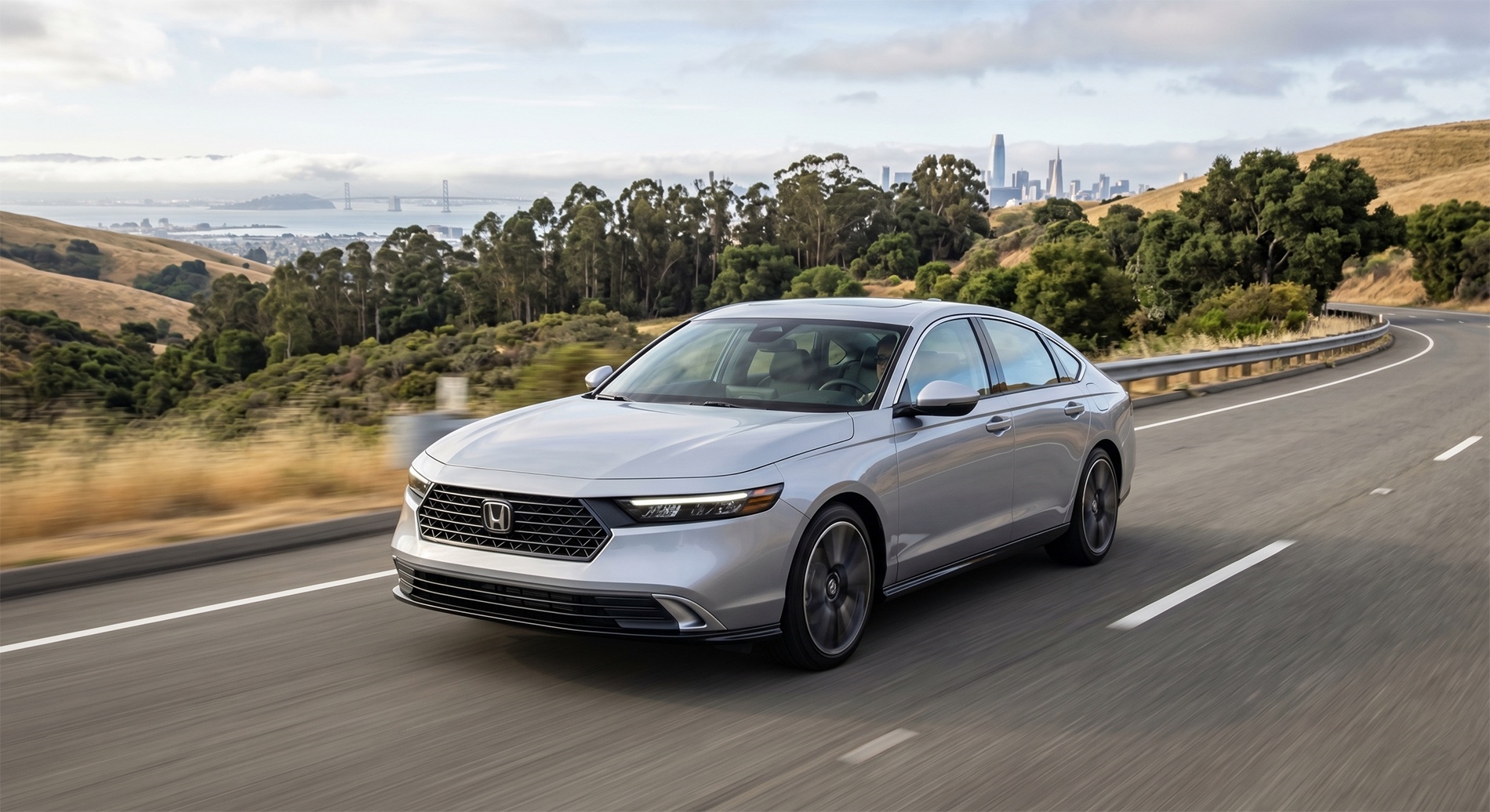
The right answer depends less on the model itself and more on how your week actually looks. Around El Cerrito, a commute often means working your way along San Pablo Avenue, catching lights every few blocks, or easing onto I-80 and settling into traffic that never quite opens up. That kind of driving rewards efficiency in motion, not just on paper.
If most days involve stop-and-go traffic or short trips, the Civic Hybrid or Accord Hybrid tend to make the most sense. They stay efficient when the drive feels broken up, which is where fuel use adds up the fastest. Over time, that difference becomes noticeable without changing how the car fits into daily use.
If you need more space, the CR-V Hybrid keeps that same advantage while adding flexibility. It handles errands, gear, and passengers without feeling like a step away from efficiency, which matters when the day includes more than just the commute.
If your drive stretches out a bit more once you get past the congestion, gas models like the Civic or Accord still hold steady. And if you are ready to move past gas entirely, the Prologue shifts the routine toward charging instead of fueling.
The key is matching the vehicle to how you actually move through your day, not just the number on the window sticker.
FAQ: Honda Fuel Economy & Gas Mileage
This FAQ covers common questions about Honda fuel economy, hybrid efficiency, MPGe, commuting fit, and how different Honda models balance gas mileage with daily usability. It is designed to help shoppers understand which Honda vehicles make the most sense for real East Bay driving.
Which Honda models get the best gas mileage? ▼
The Honda Civic Hybrid and Accord Hybrid sit near the top of the lineup for gas mileage, with the CR-V Hybrid also standing out for SUV shoppers who want strong efficiency without giving up everyday versatility.
Which Honda SUV has the best fuel economy? ▼
The CR-V Hybrid is one of the most fuel-efficient Honda SUVs. It gives drivers a practical crossover shape, useful cargo space, and strong city-friendly efficiency that fits daily driving well.
Do Honda hybrids really make a noticeable difference in everyday driving? ▼
Yes. Honda hybrids tend to show their biggest advantage in stop-and-go driving, short trips, and traffic-heavy routines where the electric motor can do more of the work and reduce fuel use over time.
Is the Honda Accord Hybrid more efficient than the gas Accord? ▼
Yes. The Accord Hybrid delivers a clear jump in fuel economy over the gas trims, especially in city driving. That makes it a strong fit for drivers who want midsize comfort without taking on higher fuel costs.
Is the Honda Civic Hybrid worth it for commuting? ▼
For many commuters, yes. The Civic Hybrid combines strong MPG with easy maneuverability, comfortable daily driving manners, and the kind of efficiency that becomes more noticeable the more often the vehicle is used.
What does MPGe mean on the Honda Prologue? ▼
MPGe stands for miles per gallon equivalent. It is used for electric vehicles like the Honda Prologue to show how efficiently the vehicle uses electricity compared with the energy in a gallon of gasoline.
Which Honda models make the most sense for stop-and-go traffic? ▼
Honda hybrids usually make the most sense in stop-and-go traffic. The Civic Hybrid, Accord Hybrid, and CR-V Hybrid all take better advantage of slower, broken-up driving patterns than their gas-only counterparts.
Are larger Honda models still reasonably efficient? ▼
Yes. Models like the Odyssey, Pilot, Passport, and Ridgeline are not built to lead the lineup in MPG, but they still keep fuel use reasonable for their size, space, and capability.
How should shoppers choose between a gas Honda, hybrid Honda, and electric Honda? ▼
The best choice depends on driving habits. Gas models work well for straightforward ownership and longer steady drives. Hybrids tend to make more sense for traffic, shorter trips, and frequent daily use. Electric models like the Prologue work best when charging access and routine fit are already in place.
Where can drivers near the East Bay compare Honda MPG ratings in person? ▼
At El Cerrito Honda, we help drivers from Oakland, Berkeley, Richmond, San Leandro, Alameda, Walnut Creek, San Pablo, Emeryville, Martinez, Pinole, Hercules, and Orinda compare Honda fuel economy in person and narrow down which model makes the most sense for real East Bay commuting and daily driving.
Why Drivers Choose El Cerrito Honda
At El Cerrito Honda, we approach fuel economy the same way we approach every part of the buying process. It needs to make sense in real ownership, not just on paper. MPG numbers are easy to compare, but what matters more is how those numbers translate into daily use, long-term costs, and how often you actually feel the difference.
We help shoppers sort through that clearly. Whether you are deciding between a gas model, a hybrid, or moving into an electric vehicle, we focus on how each option fits your routine instead of pushing a one-size answer. That means looking at how often you drive, how your trips are structured, and where efficiency actually shows up in your week. When you're ready to take the next step, you can browse new Honda inventory here or view current Honda specials to see how those options line up in real time.
We are proud to serve drivers from Oakland, Berkeley, Richmond, San Leandro, and Alameda, along with the greater East Bay. If you are comparing MPG across the Honda lineup and want to understand which model actually fits your driving habits, we are here to help you narrow it down with clarity.
DISCLAIMERS:
*EPA-estimated mileage and MPGe ratings shown. Actual mileage and range will vary based on driving conditions, vehicle maintenance, battery age, driving habits, temperature, terrain, and other factors.
*MPGe (miles per gallon equivalent) is a measure used by the EPA to compare energy consumption of electric vehicles to gasoline vehicles. It does not represent actual fuel consumption.
*Electric driving range estimates are based on EPA ratings. Actual range will vary based on charging habits, weather conditions, driving style, use of climate controls, and other factors.
*Hybrid system performance and fuel economy will vary depending on battery charge level, driving conditions, and use of the electric motor.
*All specifications, features, and fuel economy figures are based on the latest available manufacturer data at the time of publication and are subject to change without notice.
*Vehicle availability, trims, and equipment may vary by dealership and region.
*MSRP excludes destination and handling charges, taxes, title, license fees, and dealer-installed options. Actual dealer pricing may vary.
*Images and descriptions are for illustrative purposes only and may not reflect exact vehicle specifications.